


A claiming race in horse racing is one of the most common types of races that you’ll see at American racetracks. These races are unique because every horse in the race can be purchased or “claimed” before the race starts. It is important to understand what claiming races are when learning to handicap a horse race well. These races can give insight into the abilities of the horses and help to organize the competition on the field in a more balanced way.
What Is a Claims Race in Horse Racing?
A claims race is a type of race where every horse entered has a set price, and anyone who has the proper license can submit a claim on a horse before the race begins. The horse will still compete for their current owner until the race ends, and ownership will transfer after the race.
Claims races will typically be priced somewhere between $5,000 to $30,000 for lower to mid-level races. You can even find claiming races priced at $100,000 or above at major tracks. The price of a race will generally reflect the abilities of the horses in it, and higher-priced claiming races tend to have more competitive fields. A lower-priced race will normally include less experienced or less accomplished horses. Higher-priced claims races will often feature a larger purse as well. This structure allows professionals and fans to understand the ability of the horses competing in the race more easily. Understanding this structure is key to learning how a claiming race works.
How Does a Claiming Race in Horse Racing Work?
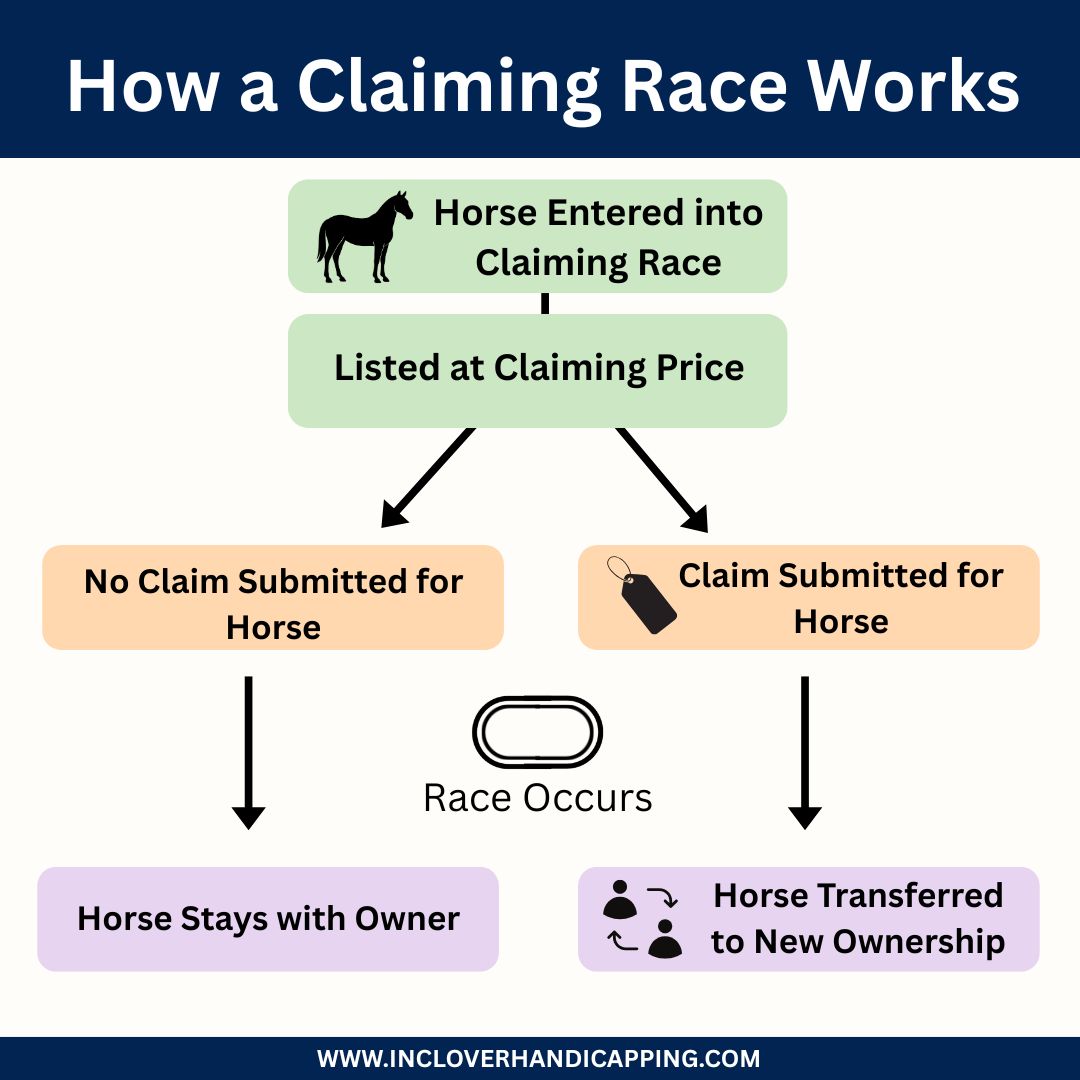
In horse racing, a claiming race has certain rules to keep everything fair for all participants. All claims must be submitted before a race begins in order to be considered legitimate. Claims can be submitted by a licensed owner, trainer, or their representatives. Changes cannot be made after a race starts.
The horse will run the race for its current owner, and they will get the purse money for the race. Once the race ends, ownership will be transferred to the claimer. The price of the claim is set before the race and does not change based on how well the horse performs in the race.
Not all horses will be purchased in a claiming race. In fact, it’s very common for most horses not to be claimed, and sometimes no claims are made at all during a race. If a horse does not get claimed, it will remain with its current owner and trainer. So, these races do not guarantee that a horse is bought, but it means that there is a potential for it to happen.
Why Horses Are Entered and Claimed in Horse Racing
Owners and trainers will enter a horse into a claiming race in horse racing for a few reasons. One of the main reasons is to find a race with the right level of competition that matches the ability of the horse. If a horse has been struggling in tougher races, dropping them into a claiming race can help them finish better and build confidence. Most horses in these races do not get claimed, so the goal is usually to give the horse a more competitive spot rather than selling it.
Claiming races are also beneficial for horses who are coming back from an injury or a layoff. This usually gives them an environment where they can get comfortable again, and the competition is a bit more manageable. This allows the horse to finish well and enter better races in the future, instead of throwing the horse into a race that’s too difficult for them.
What Are the Types of Claiming Races?
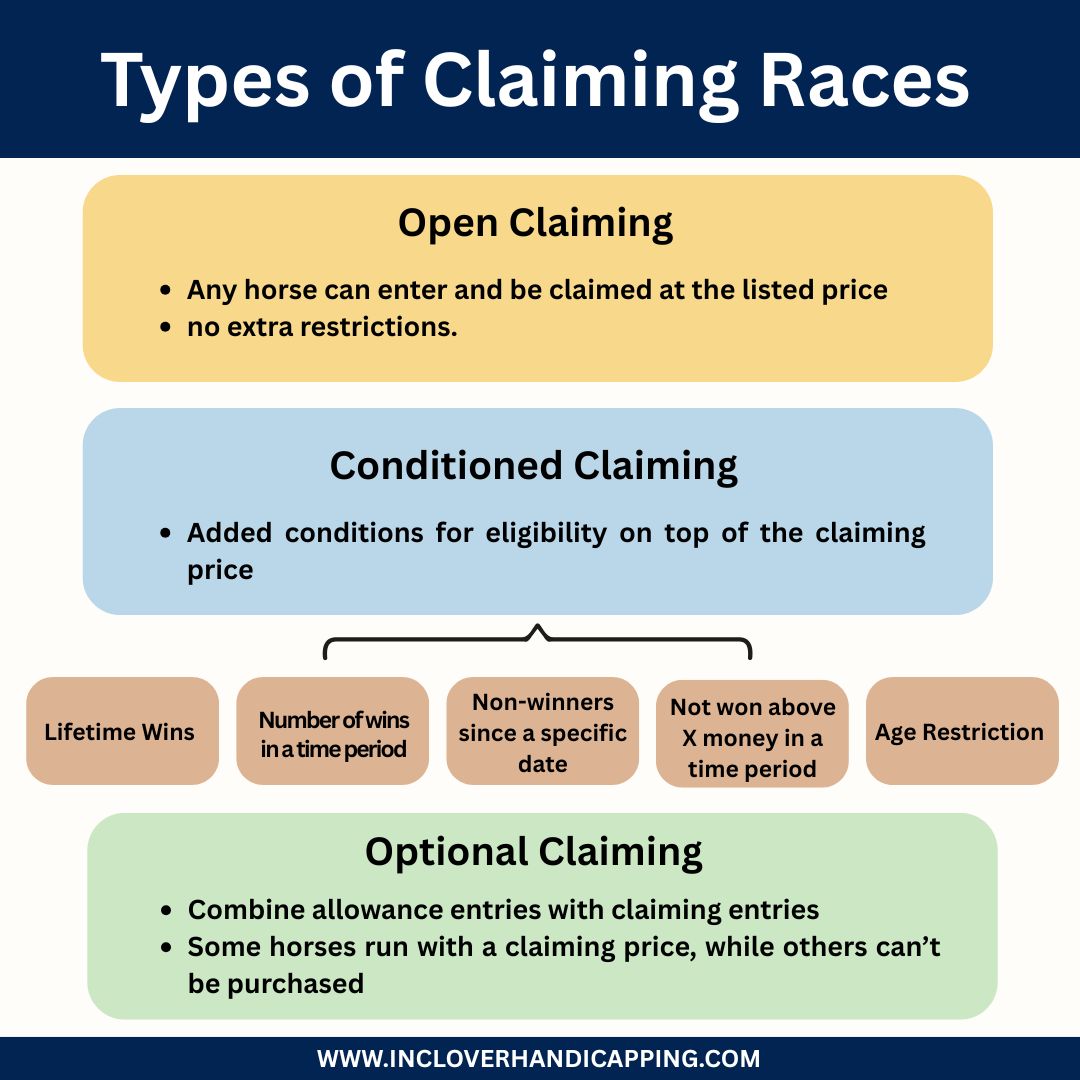
There are several types of claiming races that each serve their own purpose in horse racing. They are typically grouped by the participating horses’ experience or their ability, which allows trainers to place their horses in races where they can be the most competitive. For anyone learning how to read a race card or handicap a horse race, it’s important to understand the different types of claiming races. Knowing the differences between them makes it easier to analyze the field and see which horses might be the strongest.
- Open Claiming Races: In an open claiming race in horse racing, every horse that is entered will be available to be claimed at the race’s listed price. There aren’t any additional eligibility restrictions. These fields can be larger because the races don’t limit entries based on wins or age.
- Conditioned Claiming Races: These races add additional restrictions, or conditions, beyond the claiming price of the race. While the specific conditions can vary by track, there are five common types of conditioned claiming races:
- Lifetime Win Conditions: These races restrict the entries based on the number of wins the horse has earned in their career.
- Maiden Claiming Races: (N0L): These races are for horses that are still maidens and have not yet won a race in their career.
- Non-winner of 2 Lifetime (N2L): These races are for horses that have not won 2 races in their lifetime. So only horses with no wins or one win are eligible.
- Non-winner of 3 Lifetime (N3L): These races are for horses that have not won 3 races in their lifetime. Horses with zero to two wins are eligible.
- Non-winner of 4 Lifetime (N4L): This type of race is for horses that have not won 4 races in their lifetime. Horses with zero to three wins are eligible.
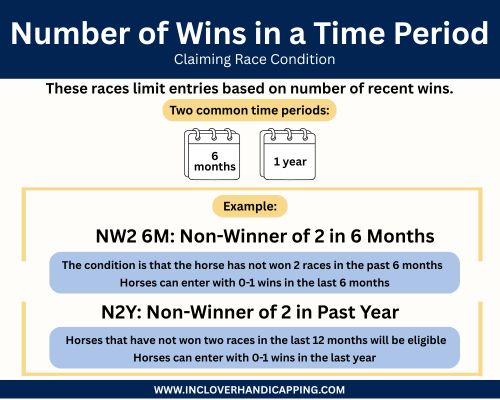
- Number of wins in a time period: These races limit entries for horses based on recent wins. This attempts to limit the field to horses that have not been dominating recently, even if they have had success outside of the time frame. The two most common periods of time used as a condition are:
- Lifetime Win Conditions: These races restrict the entries based on the number of wins the horse has earned in their career.
- Non-winners since a specific date: These races are for horses that haven’t won since a certain date.
- Not won above a certain money level in a period: These races limit horses that have earned more than a certain amount of money in a specific time frame.
- Age-restricted claiming condition: Some claiming races are only open to horses of a certain age. This condition groups horses together based on their maturity and experience.
- Optional Claiming Races: These races are a mix between an allowance race and a claiming race. Some horses will be entered with a claiming price, while others will enter under allowance and cannot be purchased. This allows trainers to run a horse that they don’t want to risk losing, while still allowing them to be competitive. Because they combine allowance-style entries with claims, optional claiming races can attract a wide variety of competitors.
Claiming Races vs Allowance Races
Claiming races sit right below allowance races in the horse racing hierarchy. In a claiming race, every horse will be able to be purchased for the set price of the race. In an allowance race, the horses are not for sale. Allowance races often have similar conditions to conditioned claiming races, such as limitations based on lifetime wins, age, or earning levels. Since horses cannot be claimed from an allowance race, the fields usually end up being a little stronger. These horses are often still improving and aren’t yet ready for stakes races, but they generally have more experience or ability than many claiming race horses.
Horses can move between these two types of races for a couple of reasons. A trainer may opt to move a horse from allowance into claiming to give it slightly easier competition. Alternatively, a horse that has been performing well in claiming races may move up to an allowance race, which indicates that they are ready for a stronger level of competition. Noticing when a horse moves up or down in class can give insight into a horse’s form and its abilities.
How to Analyze and Handicap Claiming Races
Handicapping a claiming race in horse racing is mostly about spotting patterns. Trainers tend to have routines for how they place their horses, and spotting this makes reading races easier. One of the biggest things to pay attention to in horse racing is how a horse moves in class. A drop into an easier level can mean that the trainer is looking for an easier race for the horse, but this can also indicate that the horse isn’t holding its form. It’s also important to take note of when a horse is coming back from a break. A break or layoff isn’t always a bad thing. However, if there’s a big drop in claiming price right after they return, it can be a negative indication. Trainers may also switch classes due to switching surfaces, changes in distances, or returning to a track where the horse usually runs well.

It’s important for handicappers to pay attention to how a horse performs in their first races after being claimed. Some trainers are known for improving newly claimed horses, and some others don’t have that same track record. You can analyze this type of information within our “Key Trainer Stats” report on our InClover Handicapping Tool. You will be able to see how often a trainer’s horse wins or places in its first or second race after being claimed. Checking a horse’s workout history can also give you hints into how the horse is doing after the claim, especially if you see more frequent workouts or better times. Learning how to analyze claiming races comes down to paying attention to small clues, like class drops, workouts, and how a trainer’s horse performs after a claim. This can give you a better understanding of the race and who the strongest contenders on the field may be.